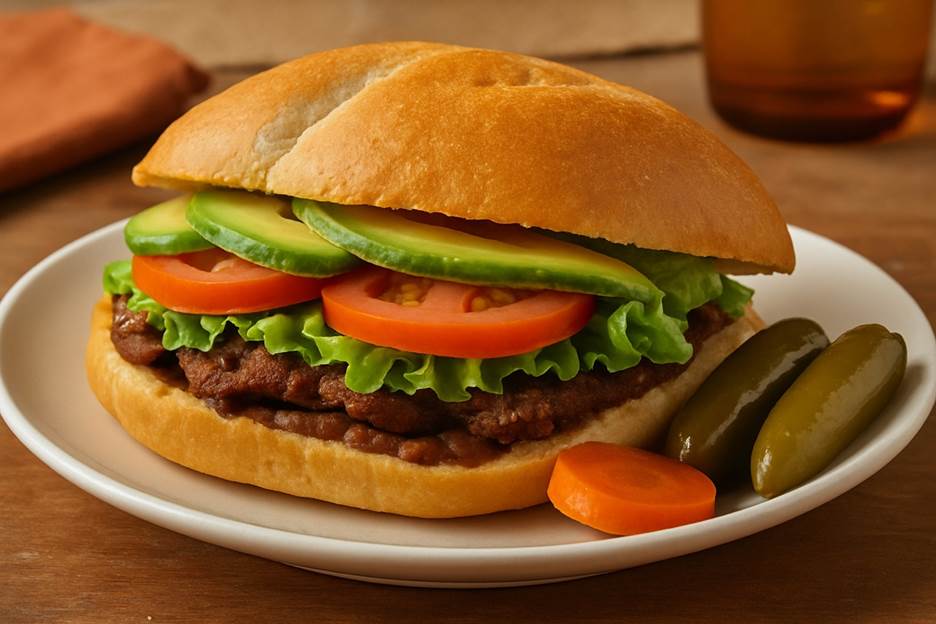
Tortas are Mexican sandwiches made with soft yet crusty rolls (typically bolillo or telera bread) filled with a variety of ingredients including meats, beans, avocado, and various garnishes. They’re a beloved street food throughout Mexico and areas with large Mexican populations.
The word “torta” has a fascinating culinary journey. While in Mexico it refers to these delicious sandwiches, in other Spanish-speaking countries the same word might mean cake, flatbread, or even omelet. This linguistic diversity reflects the rich cultural mix behind this seemingly simple food.
What makes tortas special is their perfect balance of textures and flavors. The slightly sweet, crusty bread provides the foundation, while fillings like seasoned meats, creamy avocado, tangy pickled jalapeños, and fresh vegetables create a symphony of taste in every bite.
As Rick Bayless, renowned chef and torta enthusiast explains: “What I love so much about the Torta… is that there are no rules.” This freedom of expression makes tortas both an authentic cultural tradition and an endlessly customizable culinary canvas.
Whether you’re grabbing one from a street vendor at a football match or crafting your own at home, tortas represent the vibrant, accessible spirit of Mexican cuisine that has captured hearts and stomachs worldwide.
Origins, Bread, and Anatomy of Tortas
Ever wonder how Mexico’s beloved sandwich got its name? The word torta comes from Late Latin “torta panis,” meaning “twisted bread” – a linguistic cousin to the English word “tart.” While the name has ancient roots, the sandwich we devour today has a more recent and fascinating history.
The torta as we know it emerged during the 1860s when French troops occupied Mexico. Those French soldiers brought more than just military might – they introduced European baking techniques that forever changed Mexican bread-making. In Puebla, local bakers accepted these methods but added their own Mexican flair, resulting in the creation of the essential torta foundations: bolillo and telera rolls.
These distinctive breads are what make a torta uniquely Mexican. The bolillo is an oval-shaped roll with a crackling crust and pillowy interior – similar to a baguette but with its own character. The telera is softer and flatter, marked by two signature indentations that create three sections, with a subtle sweetness that complements savory fillings. In Guadalajara, the birote reigns supreme – a sourdough roll with the structural integrity to withstand being dunked in sauce for the famous tortas ahogadas.
Building a proper torta is an art form with specific architecture:
First comes the foundation – the bread split horizontally, sometimes with some interior removed to create a filling cavity. Next, a spread of refried beans or mayonnaise creates a crucial moisture barrier. The star protein follows – perhaps crispy milanesa, succulent carnitas, or smoky chorizo. Cheese adds creaminess, while fresh vegetables like avocado, lettuce, tomato, and onion bring brightness. The finishing touches? Zesty pickled jalapeños, fragrant cilantro, and punchy salsas.
The Mexican Torta Sandwich: From Puebla to Nationwide Fame
The Mexican torta as we know it today was born in Puebla following the French occupation (1862-1867). Local bakers had absorbed French techniques but adapted them to Mexican tastes and ingredients. The telera roll – now synonymous with tortas – first emerged in Puebla during this beautiful culinary fusion.
Local legend tells us that the first commercial torta appeared in 1892, created by an enterprising eleven-year-old named Armando Martínez Centurión, who opened what may have been the first tortería. By the early 20th century, tortas had established themselves in Mexico City and were rapidly conquering the entire country.
Why Tortas Became Mexico’s Favorite Street Food
The torta rose to street food stardom for several practical reasons. Their portability is best – sturdy bread contains all ingredients securely, allowing you to eat while walking without creating a mess. Their affordability made them accessible to everyone – using bread as a base provided an economical way to stretch ingredients into a satisfying meal.
The incredible versatility of the torta format lets vendors offer countless combinations while maintaining efficiency. And unlike tacos that demand immediate consumption, tortas can be prepared ahead of time without becoming soggy, giving them remarkable durability for busy food service.
These practical advantages made tortas the perfect food for massive gatherings like football matches, parades, and concerts. Today, torta vendors are fixtures at such events, feeding thousands of hungry attendees with these perfectly portable packages of flavor.
Regional & Specialty Tortas Across Mexico
Mexico’s diverse culinary landscape has given birth to an incredible variety of regional tortas, each telling its own delicious story of local ingredients and traditions. As you travel through different Mexican states, you’ll find how this seemingly simple sandwich transforms to reflect the unique character of each region.
The Spicy Legend of the Torta Ahogada
If you’ve ever visited Guadalajara, you’ve likely encountered their famous “drowned sandwich” – the torta ahogada. This fiery creation features tender carnitas (slow-cooked pork) tucked into a birote salado, a crusty sourdough roll that’s unique to the region. What makes this sandwich truly special is its dramatic finale: the entire creation gets dunked (or “drowned”) in a vibrant chile de árbol sauce.
The birth of this beloved sandwich has all the elements of a great food story. As local legend has it, sometime in the early 1900s, a sandwich vendor accidentally dropped a freshly made carnitas torta into a container of salsa. Rather than toss it out, they served it anyway – and customers went wild for the spicy, saucy creation.


Leave a Reply